

Poison frogs are among the most interesting and dangerous inhabitants of tropical rainforests. These tiny amphibians, known for their bright colours and deadly toxins, attract the attention of scientists and the general public around the world. But what would happen if you came into contact with a poison frog? How exactly does their poison work, and what effect can it have on the human body? In this article, we look at the fascinating biology of these creatures, their defence mechanisms and ways to protect yourself from them.
Table of contents
Where do poison frogs live?
Poison frogs, also known as dendrobatids, are found mainly in the tropical regions of Central and South America. They are most often found in the dense rainforests of Colombia, Brazil, Peru and Costa Rica, where the humid, warm climate provides ideal conditions for them.
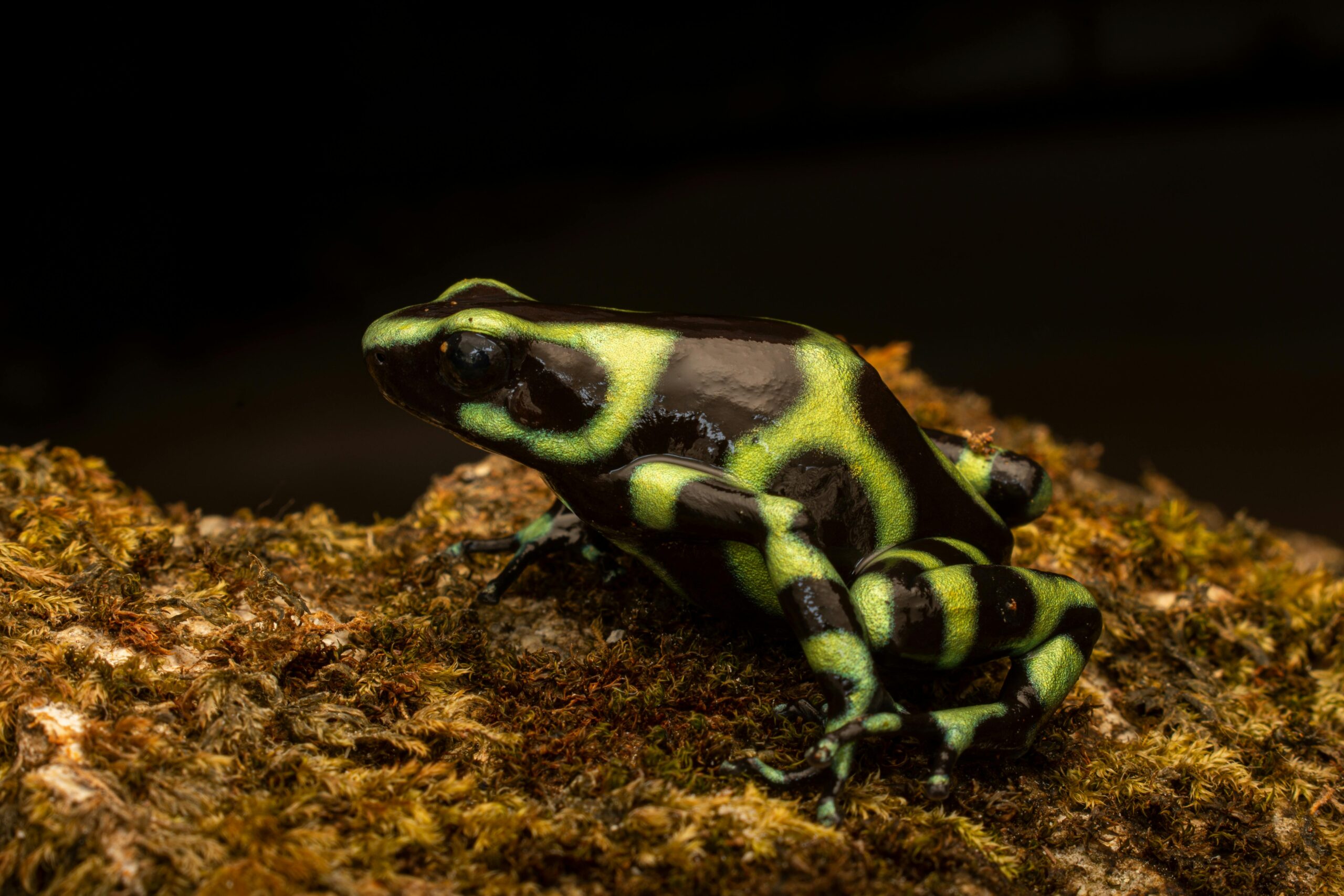
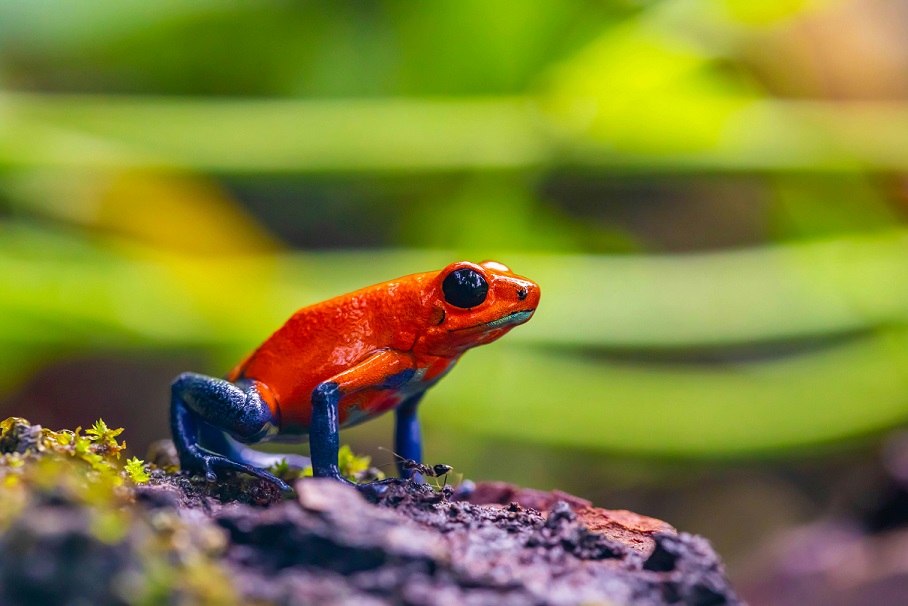
These frogs are small, usually measuring only 2 to 5 centimetres, but their size does nothing to reduce how dangerous they are. Their colours range from bright yellow through red to blue and green.
What makes poison frogs dangerous?
Poison frogs produce deadly toxins on their skin, which serve as a defence against predators. The toxins are alkaloids and work in different ways. One of the most dangerous is batrachotoxin, which can block nerve signals in the body.
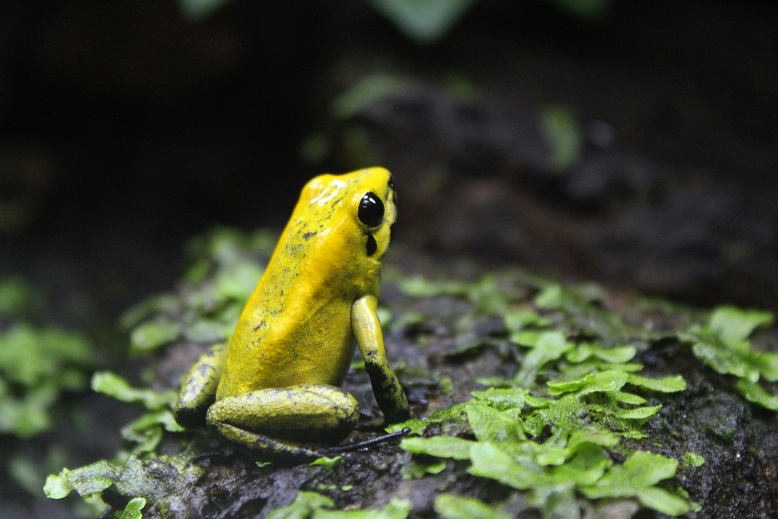
Batrachotoxin works by preventing sodium ions from transmitting signals between cells. This leads to paralysis of the muscles, including the heart muscle, which can be fatal. Some species, such as the golden poison frog (Phyllobates terribilis), can produce so much poison that they could kill up to 20 adults.
💡 Tip: Interested in poisons? Read also: The fastest and most effective poisons that have killed
What effect does the poison have on humans?
The effect of poison frog toxins on humans depends on the species of frog, the amount of poison and the type of contact. Below are the most common ways the poisons affect the human body:
- Skin contact
Simply touching a poison frog can allow the poison to be absorbed through the skin. With weaker poisons, this can cause irritation, itching or inflammation. With deadly species such as the golden poison frog, the effects can be much worse, including numbness, paralysis or even death. - Ingestion
Eating a frog or its poison is extremely dangerous. In some indigenous cultures, however, local people use dendrobatid toxins on arrowheads for hunting. Such an arrow is a deadly weapon that can kill an animal quickly. - Inhaling fumes
Although it is less common, some toxins can also be dangerous when inhaled. However, this risk mostly affects scientists who work with the toxins in laboratory conditions.
Why are poison frogs so brightly coloured?
Poison frogs send a clear visual signal to their surroundings: their bright colours. This phenomenon, known as aposematism, warns predators that the frog is poisonous and not fit to eat.
Interestingly, some non-poisonous frog species copy this colouring to fool predators. This phenomenon, called mimicry, gives these species protection without them producing any poison.
💡Tip: Do you know what febrile seizures look like? You will find the answer in our article.
How to avoid contact with poison frogs
When travelling to tropical areas where poison frogs live, follow a few basic rules:
- Do not touch animals with your hands. Even if a poison frog seems harmless, contact with its skin can be dangerous.
- Use protective equipment. If for any reason you have to touch a frog, for example during research, wear gloves.
- Learn about the local wildlife. Knowing which frog species live in the area can help you avoid risks.
- Avoid unfamiliar frogs. Even if a frog is not brightly coloured, that does not necessarily mean it is not poisonous.
The scientific importance of poison frogs
Poison frogs are not just a fascinating curiosity of nature; they also make an important scientific contribution. The toxins of these frogs are being studied for their potential use in medicine. For example, batrachotoxin, which some species produce, may help in developing painkillers or treating heart disease. Poison frogs are therefore an example of how even seemingly dangerous creatures can benefit humanity.
Interesting facts about poison frogs
- Indigenous use of the poisons
Tribes in South America used dendrobatid toxins as arrow poison for hunting. This tradition gave these frogs their common English name, “poison dart frogs”. - Size and toxicity
Although most poison frogs measure only 2 to 5 centimetres, their poison can kill up to 10 adults. - Life in captivity
Interestingly, poison frogs kept in captivity often lose their toxicity. This is because they do not have access to the specific insects that provide them with the alkaloids they need to make their poison.
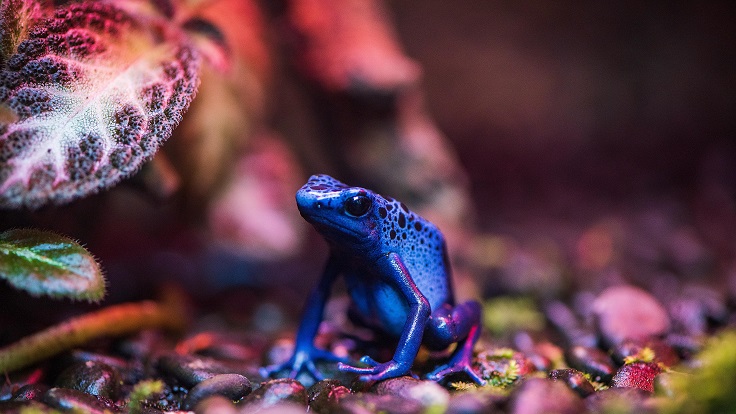
Poison frogs are a fascinating and dangerous part of nature. Their poisons are not only deadly but also scientifically valuable, which makes them a subject of interest for experts around the world. When you encounter these amphibians, it is essential to respect their natural habitat and avoid direct contact. If you act sensibly and carefully, however, you can admire the beauty of these small but powerful creatures from a safe distance.
Poison frogs are proof that nature can create creatures that are not only dangerous but also extremely useful and beautiful. Whether you are drawn to their looks, their scientific importance or simple curiosity, always remember to respect their power and uniqueness.
💡 Tip: Read also: TOP 10: The fastest animals in the world

