
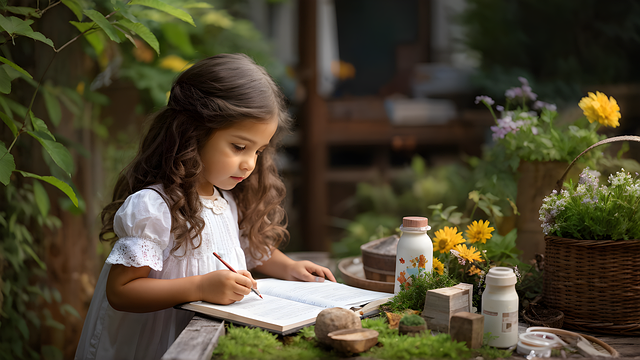
Educating children at home, or homeschooling, is becoming an increasingly popular choice for many parents who want flexibility and the chance to adapt the curriculum to their child’s needs, or who simply want to spend more time with their children. Whatever your reason for choosing home education, you can create an effective and stimulating learning environment at home.
Table of contents
1. Create a plan and structure for lessons
Educating children at home requires careful preparation and organisation. Without a plan, education could easily slide into chaos. It is important to have a clear timetable that includes not only the lessons themselves but also breaks and free time. Adapt the plan to your child’s needs and abilities so that it is manageable and motivating for them.
Tips for creating an effective learning plan
- Daily timetable: Create a regular daily timetable and stick to it so that your child gains a sense of stability and predictability.
- Setting goals: Each week or month, set specific learning goals you want to achieve with your child. This could be, for example, a new topic in maths or an improvement in reading.
- Flexibility: Home education allows for flexibility, so do not be afraid to adjust the plan if you find that your child needs more time on a particular area.
Creating a plan is particularly suitable for those who have chosen the home school approach. Thanks to the plan, your child will know better what to expect, which will give them a sense of security and also improve their ability to concentrate on the task at hand.
In unschooling, the learning process is driven more by the child’s natural interests. By helping your child develop their interests, you support not only their education but also their motivation and love of learning. The child feels that their interests matter and that they are taking part in shaping their own learning process.
2. Choose the right teaching methods and materials
One of the great advantages of home education is the possibility of an individual approach, which means you can tailor lessons to your child’s unique needs and interests. Make use of this and try out different teaching methods and materials.
Recommended methods and materials
- Practical activities: Some children learn better through hands-on practice. Involve them in experiments and creative projects, or give them the chance to discover new information on their own.
- Online resources: Today there are many interactive online courses and educational videos available, which can be especially useful for subjects that require more specialised knowledge.
- Books and workbooks: Traditional textbooks and workbooks remain a popular resource, offering structured information and clearly defined tasks.
This variety of materials will make learning fun and effective. Choose the methods that suit your child best, and remember that it is important to vary learning materials regularly so that they do not lose their appeal.
3. Create a motivating and inspiring learning environment
Unlike school, the home environment has the advantage of being tailored to your child. However, this does not mean that home education does not need a structured space where your child can fully concentrate. Create a place for your child that is used only for studying and where nothing will distract them.
How to create an effective learning environment
- Study corner: Equip your child’s room with a desk, a chair and the necessary supplies. Make sure they have everything they need for their work close at hand.
- Decoration: Try decorating the walls with maps, educational posters or a noticeboard where you can put up plans, tasks or creative work.
- Good lighting: Suitable lighting is key so that your child does not feel tired and can easily concentrate on their work.
The right environment supports concentration and helps your child stay interested in learning. In a well-organised and inspiring space, your child will be more eager to learn and explore new topics. When the weather is good, you can also use outdoor spaces for learning.
💡 Tip: If your child is of preschool age, you are surely wondering what the future of education looks like.
4. Involve children in real-life experiences and practical skills
Home education offers a unique opportunity to extend the learning process beyond traditional lessons and theoretical knowledge. Give your child the chance to learn from real life and involve them in everyday activities that will enrich them with practical experience.
Activities that can broaden home education
- Cooking and baking: Involve your child in cooking, where they can learn about measuring, maths, chemistry or even cultural differences in cuisine.
- Running the household: Show your child how to organise cleaning, shopping or planning the household budget.
- Nature and experiments: A garden or park is a great place to explore biology, ecology or natural sciences. Children can, for example, watch how plants grow or collect various samples to examine later.
By involving children in everyday life, you help them develop skills that are not only useful but also encourage independence and responsibility.
5. Stay in touch with the community and get support
One of the possible pitfalls of home education is isolation, for both the child and the parents. Social contact and community support are important so that the child does not feel lonely and has the chance to develop socially as well.
Ways to get involved in the community
- Meeting other families: There are various communities of families who have chosen home education. Such meetings can provide your child with friends and can also be a valuable source of information and support for you.
- Joint projects and workshops: Organise joint educational projects or workshops where children can learn from others and work in a group.
- Online communities and courses: Join online forums and groups where you can meet other parents, share experiences and get valuable advice.
Support from and connection with other people who educate their children at home helps reduce stress and find new ideas to enrich lessons. At the same time, your child gets the chance to spend time with peers and develop social skills.
Answering criticism of home education
Educating children at home is often a target of criticism, for many reasons. Mostly this comes from a misunderstanding of homeschooling and an unwillingness to accept that children can be educated in other ways.
- Social contact: Home education offers many opportunities for social interaction. Children can take part in extracurricular activities or smaller study groups, which allow them to develop social skills in mixed-age groups.
- Lack of expert knowledge: Parents can use a wide range of educational materials, online courses and tutors that allow children to gain in-depth knowledge in various subjects. Parents can also continue their own education.
- Limited access to equipment: Public libraries, science centres and online platforms give home-educated students access to specialist materials and resources, replacing school laboratories and libraries.
- Risk of parental overload: Good organisation and dividing teaching between parents and specialists reduce the risk of burnout. Home education communities and a flexible timetable also allow parents to find time to rest.
- Lack of objective assessment: Parents can use standardised tests and online platforms that measure the child’s progress. Many families work with educational institutions, which ensures regular and less stressful feedback.
- Lack of real-life experience: Children regularly take part in real-life activities (volunteering projects, financial planning), which is often more effective than theoretical teaching.
- Preparation for higher education: Home-educated children tend to be used to independence, effective organisation and communication. This makes them well prepared for university and professional life.
💡 Tip: Wondering what type of education will be best for your child? Explore the options for alternative education where you live, or read about alternative education in the Czech Republic.
Unschooling vs. home school
Have you decided to teach your child at home? Unfortunately, that does not mean you have won yet. Which form of learning will be right for you and your child? I will outline the approaches to learning you can choose from.
The difference between unschooling and home school lies in the approach to the organisation and content of education.
- Home school: Home school (also known as homeschooling) is an alternative form of education in which the child does not attend a traditional school but learns at home under the guidance of parents or a tutor. Parents often follow a particular curriculum, similar to the school system, and cover standard subjects (maths, the national language, science and so on). Lessons have a structure that may resemble a school timetable, and the aim is for the child to achieve results that match the official school curriculum. Home school can be very flexible, but parents often arrange regular assessment and progression according to the child’s age. Rules differ by country, so check with your local education authority.
- Unschooling: Unlike homeschooling, unschooling is much looser and less structured. This approach focuses on natural, child-led learning without a fixed timetable or curriculum. The child learns based on their own interests and curiosity, which means they can spend more time on the topics and areas they enjoy and less on those that interest them less. Parents act more as guides who provide stimuli and materials but let the child explore at their own pace. Unschooling does not place emphasis on tests or formal assessment.
Both approaches have their advantages and disadvantages, and both can be successful if they suit the needs and nature of the child and the family.
Educating children at home can be rewarding and bring excellent results if it is set up and organised properly. The key is creating a structure, choosing suitable learning materials, providing an inspiring learning environment, including real-life experiences and staying in touch with the community. These tips will help you make home education an effective and positive experience for both you and your child.