
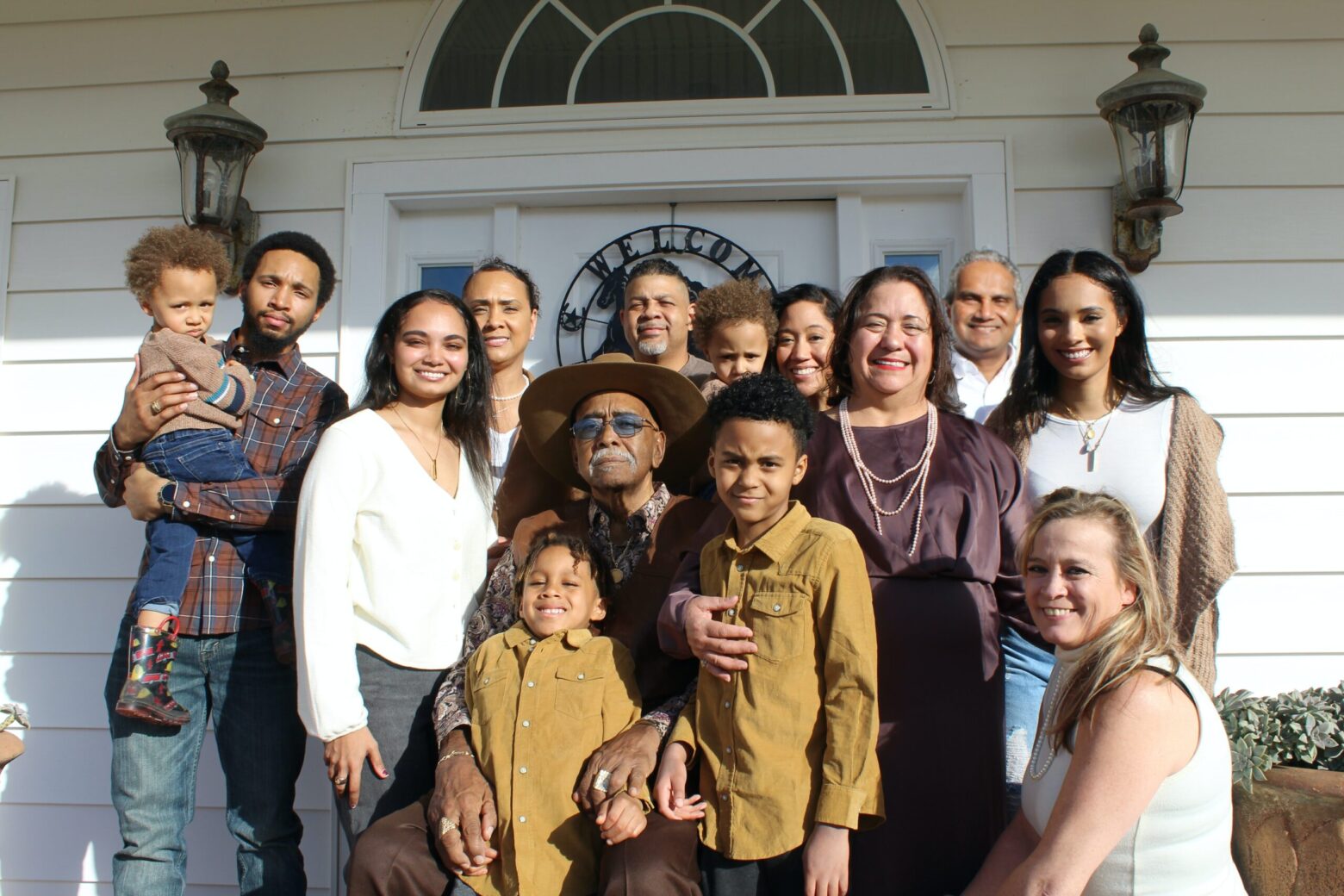
Each of us belongs to a generation, whether X, Y or Z. Do you know which one you belong to and what makes it distinctive? Let’s take a closer look!
The short answer. Generations are grouped by year of birth into cohorts that shared a similar childhood, similar technologies and similar social events. The most commonly discussed are the Silent Generation, baby boomers, Generation X, Generation Y (also known as millennials), Generation Z, Generation Alpha and, most recently, Generation Beta. However, the exact year boundaries differ from source to source, which is why Pew Research Center and McCrindle Research treat generations as a rough guide rather than a strict rule.
Table of contents
Why is it useful to know what makes each generation distinctive?
Besides perhaps wanting to learn something about yourself, you will also find the generational breakdown useful in business. Why? Because each generation uses different media, responds to different offers and reacts in different ways. If you are active in the market and have something to offer, you should work out which generation your products are aimed at and focus on the right form of advertising, as this can be decisive for your success.
To help you get a better idea of what appeals to X, Y and Z, here is a quick and clear overview:
Generation X
- watch television,
- use Facebook,
- send emails and share videos.
Marketing tips for this generation:
- include videos
- add search functions so everyone can find the information they are looking for,
- ask for their opinions, as Generation X likes to hear that their views matter,
- send newsletters by email, as Gen Xers spend a lot of time there,
- advertise on Facebook and search engines.
Generation Y
- are active on social media,
- care about design and graphics,
- read reviews.
Marketing tips for this generation:
- work with influencers,
- focus on social benefit, the environment, fair trade and work ethics,
- optimise your website for phones, as that is where they spend most of their time,
- focus on a working communication channel, ideally a chat, which is fast and effective.
Generation Z
- are active on social media,
- trust influencers,
- want to save money.
Marketing tips for this generation:
- work with influencers,
- support a good cause, help charities, be socially responsible,
- make everything as easy as possible, with search functions and information right under their noses.
If you want to succeed, focus on the tips for your chosen target audience. Make full use of them and you will see that things go well for you! To learn even more about each generation, let’s take a closer look at them.
The generations explained
We have outlined what is typical for each generation and what interests them. Now, however, we should look at the characteristics of each generation so that we can understand them better. X, Y and Z differ from one another, and if you do not know the differences, you may end up in a conversation you will not understand. A glimpse into their world will help you gain a general overview, understanding and better communication. Ready?
The Silent Generation and why the boundaries differ between sources
Before the baby boomers there was one older group that is talked about less often. In its 2015 overview of generations, the American Pew Research Center called it the Silent Generation and included people born between 1928 and 1945. They grew up during the economic depression and the Second World War, which, according to Pew Research Center, is why they tend to be associated with thrift and a sense of discipline.
The boundaries between generations are always set by a particular institution, which is why the figures differ between sources, usually by a few years. In a 2019 analysis, Pew Research Center classifies people born between 1946 and 1964 as baby boomers, those born between 1965 and 1980 as Generation X, and those born between 1981 and 1996 as Generation Y, or millennials. Pew Research Center itself points out that dividing generations by year of birth is not an exact science but rather a working tool for comparison.
Together with the baby boomers, the Silent Generation makes up the oldest part of the Czech population, whose share continues to grow according to the Czech Statistical Office (Český statistický úřad). As of 31 December 2025, the Czech Republic had 10,915,839 inhabitants, and 2,272,755 people were aged 65 or over, which is 20.8% of the population. If you are approaching retirement and want to compare supplementary savings options, ask a local financial adviser or pension provider; an overview of the Czech system is in our article on supplementary pension insurance (in Czechia: penzijní připojištění).
Baby boomers
The oldest generation, the “baby boomers”, includes people born between 1946 and 1964. Most of them are now retired or a few years away from it, so they have plenty of free time to spend watching television, listening to the radio or reading newspapers. Most of them are not comfortable with social media, but they can use email and send text messages. They prefer security to taking risks, and family is very important to them.
Typical traits:
- security,
- traditional media,
- family comes first.

Generation X
This generation includes people born from 1965 to 1985, who are at the peak of their careers, which means they are the main purchasing power, something you can take advantage of as a business owner . They typically value hard work, do not complain, can stay with one company for many years and respect authority. For them, the internet has become a place to connect with friends, pay bills and look up recipes. Their favourite social network is Facebook.
Typical traits:
- strict work habits,
- spending time online,
- Facebook as their favourite network.

Generation Y
People born between 1983 and 1997 belong to Generation Y, which, unlike the previous ones, grew up with the internet. They now use all kinds of apps, hardly ever make phone calls and live their social lives mostly online, usually on Instagram. They put their personal lives above work and have their own requirements, such as flexible working hours, part-time jobs or working from home. They want to explore, so they study various subjects, go on stays abroad and change jobs. In general, they love change and have no trouble asserting themselves.
Typical traits:
- active almost exclusively on social media,
- personal life matters more than money,
- drive, curiosity and entrepreneurial spirit.

Millennials as another name for Generation Y
Generation Y is commonly nicknamed millennials because it is the generation that came of age around the turn of the millennium. The term millennials was first used by the American authors William Strauss and Neil Howe as early as 1987, and they then introduced it to the wider public in their 1991 book Generations. It is used interchangeably with Generation Y in many other sources, including texts by Pew Research Center.
According to data from Marketing Miner, people on the Czech internet search for the term Generation Y considerably more often than millennials, even though they mean the same thing. If you want to find out which generation you belong to based on your year of birth, just look at the years listed for Generation Y above.
Generation Z
The generation born from 1997 onwards is known by the letter Z. They are the first children to enter an already established online world, so they got their first phone while still at primary school. They are adaptable, like diversity and simplify everything as much as possible, and they do not understand why they should still need to remember anything today when everything can be looked up online. Most of them look for alternatives, whether in education, lifestyle or work. Even though they have not been in the market for long, and some have not even entered it yet, it is worth focusing on this group because it represents the future.
Typical traits:
- diversity,
- alternative approaches,
- adaptability and the ability to simplify traditional methods.

When Generation Z begins and ends
The article above states that Generation Z was born from 1997 onwards but does not say when it ends. In 2019, Pew Research Center set 1997 as the first birth year and did not set an upper limit at the time. In later analyses and at many other institutions, 2012 is commonly used as the last birth year of Generation Z, after which Generation Alpha begins.
People born in the boundary years, around 1996 or 2012, may feel closer to the neighbouring generation than to the one the formal classification places them in. Pew Research Center therefore recommends treating generational boundaries as a rough guide, not as a precise category that defines a person.
Generation Alpha
The very youngest generation is Generation Alpha, which includes children born from roughly 2010 and, according to the McCrindle Research agency, up to 2024. They encountered technology as early as nursery school because it was built into their lessons. Being online feels natural to them, and it remains to be seen what impact this will have on their future.
Typical traits:
- technology from an early age

Generation Alpha and the exact birth years
The article above states that Generation Alpha was born from roughly 2010 onwards, but international sources work with a more specific range. The term Generation Alpha was first used by Australian researcher Mark McCrindle, whose agency McCrindle Research places people born between 2010 and 2024 in this generation. They are therefore the children of millennials and the older part of Generation Z.
Unlike the Pew Research Center, which is cautious when commenting on younger generations, McCrindle Research sets the boundaries of Generation Alpha and its successor in advance, based on 15-year cycles. Under the same method, Generation Alpha is followed by Generation Beta, which the next part of the article covers.
Generation Beta, the youngest generation
Generation Beta is the youngest generation discussed when people are grouped by year of birth. Mark McCrindle and his agency McCrindle Research place people born between 2025 and 2039 in this generation. They are therefore the children of Generation Alpha and the younger part of Generation Z.
Because the first members of Generation Beta are only a few months or years old, their typical traits are more of an estimate than observed behaviour. McCrindle Research expects them to grow up surrounded by artificial intelligence as naturally as Generation Alpha grew up with touchscreens, but it will only be possible to verify such a claim years from now. How excessive use of social media affects the mental health of the youngest users is described in the article on the destructive effect of social media on mental health.
What the word boomer means in everyday speech
Outside the formal division of generations, the word boomer is also used as a label for an older person who does not understand new technology or new social issues. In this form, the phrase OK boomer was already spreading on TikTok in autumn 2019. Journalist Taylor Lorenz wrote about its rise on 29 October 2019 in The New York Times, and one of its viral moments came a week later, on 5 November 2019, when New Zealand MP Chlöe Swarbrick used it to respond to heckling from colleagues during a speech on the climate.
In that article, journalist Taylor Lorenz described how young people use the phrase OK boomer as a response to condescending remarks about the younger generation, whatever the age of the person making them. In everyday speech, the word boomer therefore often does not mean a baby boomer born between 1946 and 1964 in the strict sense, but rather anyone who behaves according to older patterns of thinking. If you are tired of being labelled by generation, you can find inspiration on how to stop being pigeonholed in general in the article how to break out of a rut.
Communicating across generations
Based on the characteristics described above, it is probably clear that you need to communicate with each generation differently. For Gen Xers, prepare solid facts, as they do not believe things easily. With Generation Y, show that your intentions are genuine, and above all, do not waste the time of Gen Zers, but talk about something interesting that really makes sense. Generation Alpha will not chat with you much yet, but with them you will certainly need to stay up to date with current events, as times move fast and old topics no longer interest anyone.
Be patient with one another, whichever generation you are talking to, because everyone grew up (or is growing up) in a different time and had (or has) different priorities. Find common ground and learn from each other.