
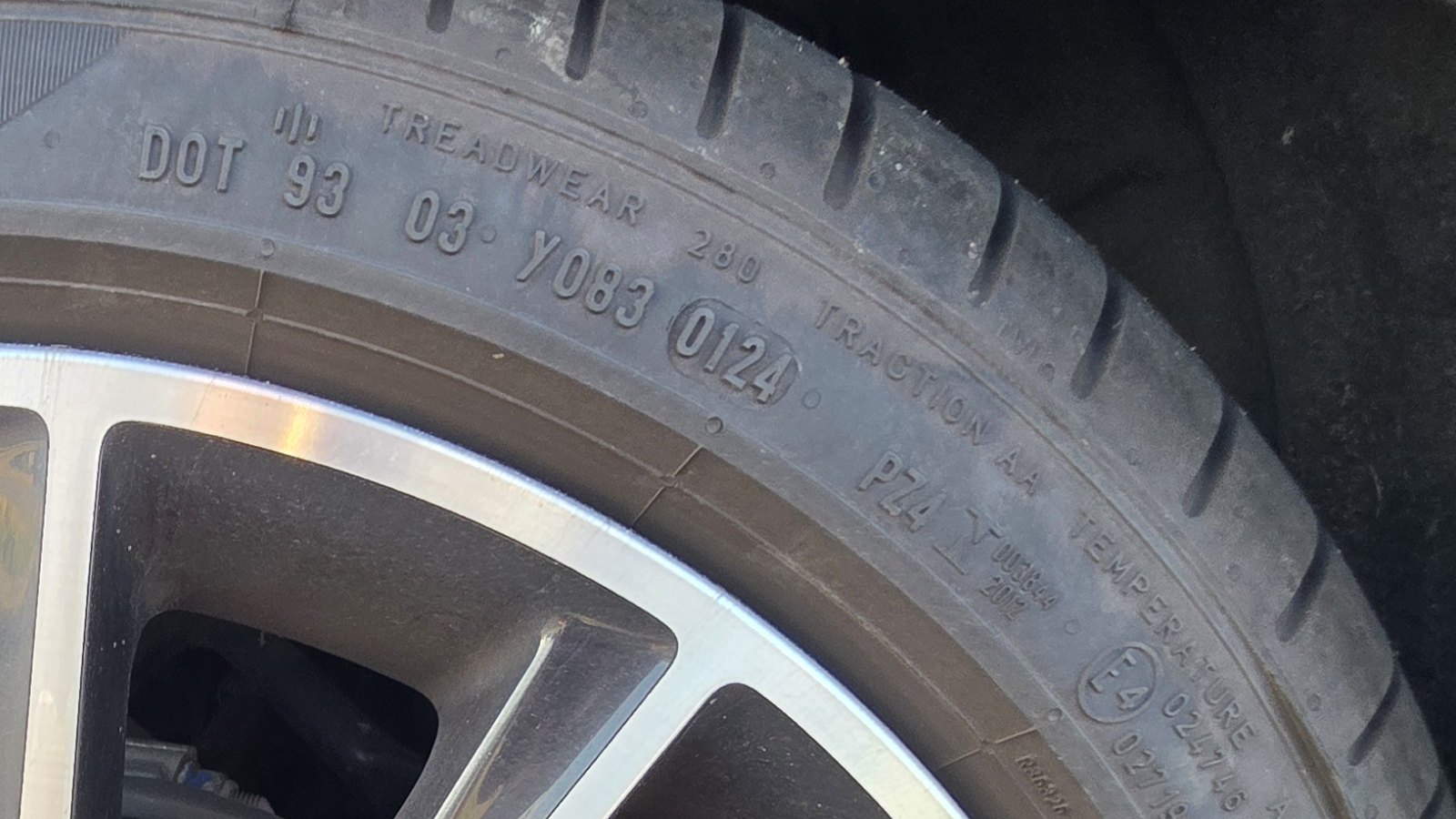
It is sensible to replace a tyre no later than eight to ten years from its date of manufacture, even if it still has plenty of tread. Michelin recommends preventive replacement after ten years, and the German motoring club ADAC gives eight to ten years for summer tyres and eight years for winter tyres. You can tell a tyre’s age from the DOT code on its sidewall, and you can extend its life mainly through correct pressure, proper wheel alignment and good storage.
Table of contents
How many years a tyre lasts
Michelin gives two limits. After five years of use, have the tyre checked by a specialist at least once a year. Ten years from the date of manufacture is the point after which it recommends preventive replacement, and this also applies to the spare wheel.
| Source and figure | Recommendation |
|---|---|
| Michelin, after 5 years of use | inspection by a specialist at least once a year |
| Michelin, 10 years from date of manufacture | preventive replacement, also applies to the spare wheel |
| ADAC, summer tyres | no older than 8 to 10 years |
| ADAC, winter tyres | no older than 8 years |
| ADAC, new tyre at purchase | no older than 2 years |
ADAC adds that winter tyres age faster than summer tyres. Their rubber hardens over time, and from about six years they lose some of their winter properties. Ageing is caused by physical and chemical processes, such as UV radiation, moisture and extreme temperatures.
 Winter tyres from 1 November: how to avoid a fine
 How much a tyre change costs, at a garage from 999 CZK (about 46 USD) per car
A tyre stored without load ages much more slowly than one on a car. Michelin states that one year of use is equivalent to ten years of storage. A tyre on a car parked outdoors is also exposed to the weather, which speeds up the ageing of the rubber.
How many kilometres a tyre covers depends on driving style, pressure, wheel alignment and load. A more reliable guide is the tyre’s age and tread depth, which you can check directly on the tyre.
How to find a tyre’s age from the DOT code
The date of manufacture is the last group of four characters in the DOT code on the tyre’s sidewall, usually set apart and framed in an oval. According to Michelin, the first two digits indicate the week and the second two the year of manufacture, so the code 0121 means the first week of 2021. The full code with the date is usually on only one side of the tyre.
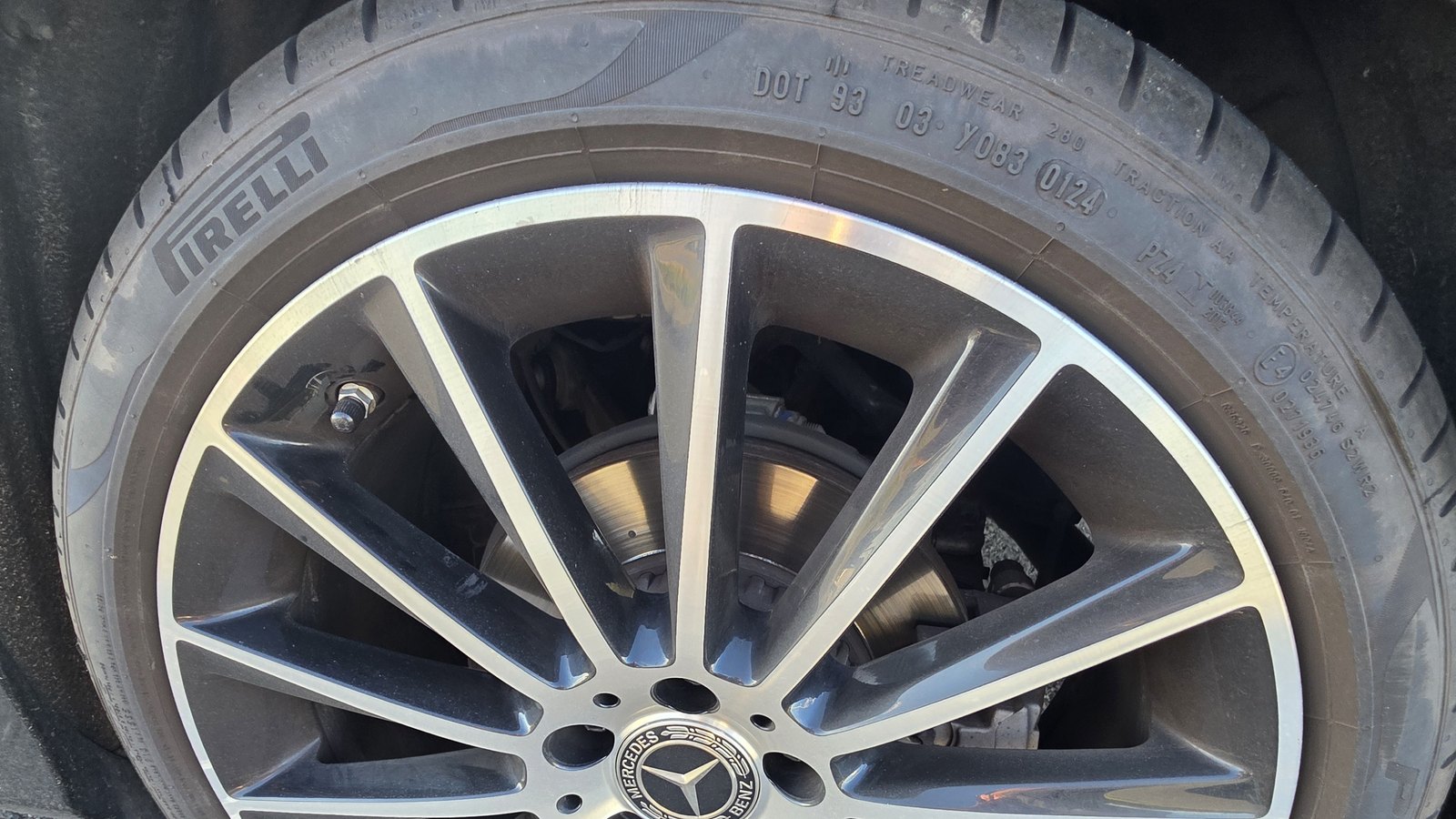
The photo shows the full DOT code 93 03 Y083 0124. The preceding groups of characters are used by the manufacturer to identify the tyre, and the age is given by the four digits 0124 in the oval, meaning the first week of 2024. As of 29 August 2026, when the photo was taken, the tyre was just over two and a half years old, and ten years from its date of manufacture will pass in January 2034.
According to Wikipedia, tyres made before 2000 have only a three-digit code, so the year cannot be determined unambiguously. For example, 042 could be the 4th week of 1992, 1982 or earlier.
What the law and the roadworthiness test (STK) say
The law does not set a maximum age for passenger car tyres, according to Portál řidiče. Keeping an eye on it is therefore up to the driver and the manufacturers’ recommendations.
According to Michelin, the legal minimum tread depth is 1.6 mm, and below this value the tyre must be replaced. Wear indicators in the tread grooves mark this depth.
Section 40a of the Road Traffic Act (zákon o silničním provozu, No. 361/2000 Coll.) requires winter tyres from 1 November to 31 March when there is a continuous layer of snow, ice or frost on the road, or when these can be expected based on the weather. For vehicles up to 3,500 kg, the tread in the main grooves must be at least 4 mm deep. Details are summarised in the article on the winter tyre requirement.
According to Autozive.cz, the roadworthiness test (STK) does not check tyre age, only tread depth and visible damage. Autohled.cz lists the 1.6 mm minimum and cracks or bulges among the items checked, and does not mention age. You can find out how much the test costs in the overview of STK and emissions test prices.
When to replace a tyre sooner
Replace a tyre before it reaches the recommended age if you notice any of these problems.
- The tread is close to the wear indicators or below 1.6 mm.
- You can see cracks, bulges or exposed cord on the sidewall or in the grooves.
- The tyre is worn unevenly, for example only on one side or in the middle.
Uneven wear is a reason to check the wheel alignment, shock absorbers and wheel balancing, which according to Deník.cz speed up wear. Have a tyre with this kind of wear looked at by a specialist.
How to extend tyre life
Michelin recommends checking the pressure of fitted tyres once a month and of the spare wheel once a year. You will find the values on the label on the driver’s door frame. Measure on wheels that have not been driven, as driving warms the air and raises the pressure.
According to the US agency NHTSA, underinflation, overloading the car and high speed all lead to dangerous overheating of the tyre. For a fully loaded car, increase the pressure according to the vehicle manual. After a hard impact with a kerb or a pothole, have the wheel inspected.
According to Deník.cz, have the wheel alignment checked and adjusted if needed once a year, or once every two years for cars with lower mileage. Keep an eye on the shock absorbers and wheel balancing too. Smooth driving with less braking saves both tyres and fuel.
Rotating the wheels crosswise evens out uneven wear. This is only suitable if the tyres are the same size at the front and rear and have a non-directional tread, otherwise follow the vehicle manual. When removing the wheels before storage, note down their positions.
Michelin recommends storing tyres in a “clean, well-ventilated and dry place at a moderate temperature, away from direct sunlight”. Store wheels on rims inflated, either hung up or laid flat, with no more than two stacked on top of each other. Before storage, clean, dry and inspect them, and keep them away from solvents, oils and sources of heat.
With two sets swapped according to the weather, each one covers only part of the year’s kilometres. The overview of tyre change prices shows how much swapping sets costs.
What the other markings on the sidewall mean
Besides the DOT code, the sidewall of the tyre in the photo shows Treadwear 280, Traction AA and Temperature A. These are the US UTQG ratings under the NHTSA regulation. You will find the size and indices on the sidewall of every tyre, and the table shows example values.
| Sidewall marking | What it means |
|---|---|
| Treadwear 280 | relative resistance to wear, a tyre rated 280 should last 2.8 times longer on the test track than a reference tyre rated 100 |
| Traction AA | straight-line wet braking on asphalt and concrete, AA is the highest grade, C the lowest |
| Temperature A | resistance to heat build-up and ability to dissipate it in a laboratory test, A is the highest grade |
| Size, for example 225/45 R17 | width 225 mm, sidewall height 45% of the width, radial construction R, rim diameter 17 inches |
| Load index, for example 94 | load capacity of one tyre 670 kg, index 91 corresponds to 615 kg |
| Speed index, for example W | top speed 270 km/h, H is 210, V is 240, Y is 300 and T is 190 km/h |
| DOT, for example 0124 | last four digits, week and year of manufacture |
UTQG values are obtained under controlled test conditions, and according to the regulation, a tyre’s actual performance may differ significantly depending on driving habits, maintenance, roads and climate. Treadwear is used to compare tyres with one another.
A new tyre with an older DOT code
A new tyre from a shop may have a DOT code several months or even years old, because it has been sitting in a warehouse. According to ADAC, a new tyre should be no older than two years at purchase.
Michelin states that a properly stored tyre made three years ago performs the same as a tyre made three days ago. Manufacturers differ on this, so it is worth asking the seller about the date of manufacture and the storage conditions.
Check the codes on all the tyres, including the spare wheel, to which, according to Michelin, the same ten-year recommendation applies, as early as when choosing a used car. If the age does not match the advert, sort it out before signing the car purchase contract.
USD amounts are approximate, converted at the Czech National Bank rate of 21.75 CZK per USD on 9 October 2026.

