

If you like breakfast, it gives you a good start to the day. But if you are one of those who don’t have much time in the morning to prepare a healthy meal, we have 18 quick breakfast recipes for you. You can make most of them in under 5 minutes.
The short answer. Build a healthy 5-minute breakfast around a protein such as eggs, quark, Greek yoghurt or tuna, then add wholegrain bread or porridge oats and a piece of fruit or vegetable. The quickest options are yoghurt with fruit and nuts, bread with a spread and scrambled eggs, all ready in 2 to 5 minutes. Anything you can’t manage in the morning, such as overnight oats or chia pudding, you can prepare the evening before.
In this article you will find 18 recipes, both sweet and savoury, with quantities and preparation time for each. You can make fifteen of them in under 5 minutes in the morning, and three are marked as prepared the evening before. After the sweet and savoury ideas come high-protein breakfasts, breakfasts for work, autumn variations, recipes for children and an answer to whether breakfast helps you lose weight.
 14 healthy cold dinners, most ready in under 15 minutes
 Healthy breakfast ideas you can eat again and again
Table of contents
What should a balanced breakfast contain?
Make sure your breakfast contains all three main nutrients, that is protein, carbohydrates and fat. This is the best way to get a nourishing meal that keeps you full for longer. Also keep an eye on how much fibre you eat, as it helps you feel full and is good for your body.
To give you a better idea of each nutrient, here are examples of foods that contain these macronutrients:
- Protein. Meat, dairy products, egg whites, pulses.
- Carbohydrates. Bread, porridge oats, millet, buckwheat, couscous, etc.
- Fat. Nuts, egg yolks, cheese, oils, avocado.
As for fibre, you will find it mainly in fruit, vegetables and wholegrain bread.
A simple guide is the Healthy Eating Plate model from experts at the Harvard T.H. Chan School of Public Health. Half of the plate should be vegetables and fruit, a quarter whole grains, which Harvard explicitly says include oats, and a quarter healthy protein.
For protein, Harvard recommends choosing fish, poultry, pulses and nuts, limiting red meat and cheese, and avoiding bacon, cold meats and other processed meat. It advises limiting dairy to one or two servings a day and juice to one small glass.
Treat the plate as a guide for your whole day’s diet, not as a strict rule for every breakfast. But always add fruit or vegetables to your bread or porridge, and swap ham for fish, a pulse-based spread or nuts from time to time.

What to avoid at breakfast
Various sweet breakfast cereals that you simply pour milk over or add to yoghurt can be tempting for a quick breakfast. They look healthy and often contain fibre too, but they often have a lot of added sugar. If you fancy them, have them now and then, but read the labels on the packaging and look for options with as little simple sugar as possible.
Fruit juices look like a healthy drink that belongs with breakfast. Unfortunately, they contain a lot of sugar. Under European Directive 2012/12/EU, sugar must not be added to 100% fruit juices. For nectars, the directive allows sugar or honey to be added up to 20% of the product’s weight, and it does not regulate fruit drinks with a lower fruit content at all. Juices quickly raise your blood sugar level, and the energy from them often doesn’t last long.
Even 100% juice without added sugar is no substitute for fruit. The World Health Organization (WHO) counts the sugars naturally found in fruit juices as so-called free sugars, just like sugar added to food, honey and syrups. It recommends that free sugars make up less than 10% of daily energy intake, which on 2,000 kcal is about 50 g.
The British health service, the NHS, advises drinking no more than 150 ml of juice or smoothie a day, and with a meal, to reduce harm to your teeth. It recommends that adults eat no more than 30 g of free sugars a day. Whole fruit at breakfast is therefore a better choice than a glass of juice.
If you like having yoghurt for breakfast, avoid flavoured ones. They contain far more added sugar. This also applies to light yoghurts. They have less fat, but their flavour often comes from added sugar or sweeteners. So read the ingredients on the packaging before you buy.
Shop-bought sandwiches filled with ham, cheese, egg and a bit of vegetable look like a tempting and healthy breakfast. Whether frozen, chilled or freshly bought at a bakery, you are better off making your own. Packaged products often contain preservatives and other additives. With fresh ones, you don’t know exactly what is in them.

4 ideas for healthy and quick sweet breakfasts
For those who can’t imagine starting the day without something sweet, here are four sweet ideas. Most take under 5 minutes, and you cook the pudding the evening before.
1. Apple strudel porridge
Porridge made from oats contains plenty of fibre and doesn’t cause a sharp rise and fall in blood sugar, so you won’t feel hungry again soon, and it satisfies sweet cravings. If you are not keen on oats, try rice, buckwheat, millet or other options. It’s best to skip flavoured instant porridge, as it tends to be sweetened.
You will need (1 serving):
- 50 g porridge oats
- 1 medium apple
- 200 to 250 ml milk
- ½ tsp cinnamon
- 1 tbsp nut butter
Coarsely grate the apple. Pour the milk over the oats in a saucepan and warm over a medium heat. Then add the grated apple and cook until thick. Flavour the porridge with cinnamon to taste and add the nut butter.
You can stay within 5 minutes with fine oats, which soften the fastest, or by heating the porridge in the microwave instead of on the hob, which takes 2.5 to 3 minutes at 800 W. Coarse oats need longer cooking, so soak them in milk the evening before and just warm the porridge in the morning. You will find more variations in our overview of the best healthy breakfast porridges.

TIP: To boost the protein, stir in a scoop of protein powder or add half a tub of quark.
2. Banana mug cake with cocoa
‘Cake in a mug’ is a quick sweet breakfast made in a single mug. If you make the mug cake with oat, millet or other flakes, you give your body plenty of fibre and stay full for longer.
You will need (1 serving):
- 40 g porridge oats
- ½ large banana
- 1 egg
- ¼ tsp baking powder
- 1 tbsp Dutch-process cocoa
- yoghurt to decorate
Mash the banana in the mug with a fork, add the remaining ingredients to it and mix well. If the batter is too stiff, thin it with water or milk. Microwave for 2 to 3 minutes depending on the power, until the cake rises. Turn it out onto a plate and decorate with yoghurt.
The whole thing takes about 5 minutes. In the microwave, 2 to 3 minutes is enough depending on the power, and the cake is done when the top is dry and springy. If you like the mug cake, try a fitness mug cake five other ways.

3. Pudding with quark and nut butter
Pudding doesn’t have to be overly sweet. If you make it yourself and give it the nutrients it needs, it becomes a quick, balanced breakfast you will enjoy.
You will need (1 serving):
- 20 g custard powder
- 250 ml milk
- 30 g protein powder
- 125 g quark from a tub
- 1 tbsp nut butter
Pour off 125 ml of the milk and warm it over a low heat. Mix the custard powder and protein thoroughly into the remaining 125 ml of milk. Then pour the mixture into the warm milk on the hob and cook until thick. In a bowl, mix the pudding with the quark and nut butter, and you can add fruit to taste.

TIP: If you have vanilla pudding, add vanilla protein. For chocolate pudding, cook it with chocolate protein.
The pudding cooks for about 5 minutes and then needs to cool a little, so you can only stay within 5 minutes in the morning if you cook it the evening before. In the morning, take it out of the fridge and mix it with quark, nut butter and fruit in a minute.
Protein powder is not essential. Without it, the protein comes mainly from the quark, and the pudding will be less thick and sweet, so taste it and add more fruit if needed.
4. Greek yoghurt with fruit and nuts
Greek yoghurt is a good source of protein and fat. If you choose a fat-free version, add nuts or nut butter. Add fruit according to your taste and preference. It gives the breakfast carbohydrates, sweetness and fibre.
For one serving you need 150 g of plain Greek yoghurt, a handful of fruit such as blueberries, raspberries or, in autumn, a chopped pear, and a tablespoon of chopped walnuts or almonds. It’s ready in 2 minutes. To find out which nuts suit breakfast best, see our article on the healthiest nuts.

3 ideas for healthy and quick savoury breakfasts
For those who love savoury food for breakfast, we also have tips for healthy quick bites in a non-sweet version. They give you the nutrients you need, keep you full for longer and take no more than 5 minutes to prepare.
1. Tvarůžky spread with wholegrain bread
Tvarůžky (a ripened Czech cheese) contain plenty of protein and almost no fat. A spread made from this cheese, combined with wholegrain bread and vegetables, keeps you full and gives your body the energy it needs.
You will need:
- 250 g semi-skimmed quark
- 250 g tvarůžky
- 2 tablespoons plain yoghurt
- 1 tablespoon mustard
- pepper to taste
Chop the tvarůžky and mash them in a bowl. Mix with the rest of the ingredients and season with pepper, but do not add salt. Serve on wholegrain bread with fresh vegetables of your choice on the side.
The spread takes 5 minutes to mix, but this amount makes six to eight breakfasts. Store it in a sealed container in the fridge and spread it on your bread on the following mornings. According to the Czech food composition database Nutridatabáze, tvarůžky contain about 30 g of protein and 1 g of fat per 100 g.
However, the same source also lists 4.8 g of salt per 100 g. If you divide the spread into six to eight breakfasts, one portion contains roughly 1.5 to 2 g of salt, which is about a third of the daily limit the WHO recommends for adults (less than 5 g). So do not salt the spread, and feel free to use more quark and less tvarůžky.

2. Egg omelette with cheese and ham
Eggs are a quick and filling basis for breakfast. An omelette with cheese and ham, served with a piece of bread and some vegetables, makes a complete and tasty breakfast.
You will need (1 portion):
- 2 eggs
- 2 slices of cheese
- 2 slices of ham
- a little oil
- salt and pepper to taste
Crack and beat 2 eggs, then season with salt and pepper. Heat a little oil in a frying pan, pour in the eggs and top with slices of ham and cheese. Serve with a piece of wholegrain bread and fresh vegetables.
The omelette is ready in the pan in 3 to 4 minutes, so even with chopping the vegetables you will finish within 5 minutes. Without ham, you can make it with a handful of spinach or chopped pepper and one slice of cheese. Eggs have their place in a balanced diet, and what scientists have found out about them is summed up in the article on the health benefits of eggs.

3. Wholegrain sandwiches with cheese and ham
A quick and healthy breakfast can be wholegrain bread with ham, cheese and vegetables. Spread a slice of bread with soft cream cheese (žervé), top with slices of ham, cheese and chopped vegetables, and cover with another slice.
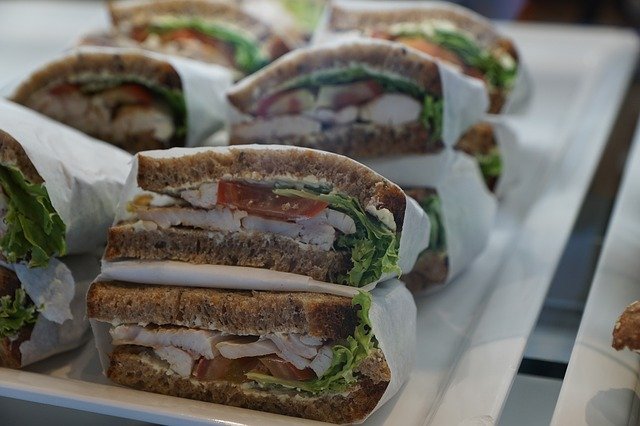
For one portion, allow two slices of wholegrain bread, a tablespoon of soft cream cheese, a slice of ham and a slice of cheese, a lettuce leaf and a few slices of tomato or cucumber. The sandwich takes 3 minutes to put together.
The ham in both the omelette and in the sandwich is processed meat. In 2015, the International Agency for Research on Cancer (IARC), which is part of the WHO, classified it as a proven carcinogen. According to its assessment, every 50 g of processed meat eaten daily increases the risk of colorectal cancer by 18%.
For an individual the risk remains small, but it grows with the amount eaten. So you do not need to cut out ham completely, but do vary it. You can make a sandwich without ham using one slice of cheese, slices of hard-boiled egg or roast chicken and more vegetables, and tuna or a quark spread also work well. You will find more ideas for breakfasts that are not sweet in the article inspiration for healthy savoury breakfasts.
Protein breakfast in under 5 minutes
Protein keeps you full for longer, and its importance grows with age. In a recommendation published in 2013 in the Journal of the American Medical Directors Association, with Jürgen Bauer as first author, the international PROT-AGE expert group advises people over 65 to eat 1.0 to 1.2 g of protein per kilogram of body weight a day.
According to the same recommendation, an older body needs more protein at once to build muscle, around 25 to 30 g in one meal. A breakfast of just bread with jam or porridge with fruit falls far short of this, so always include eggs, quark, cottage cheese, Greek yoghurt or fish. You will find an overview of other sources in the article how to get more protein.
Scrambled eggs with spinach on wholegrain bread
Scrambled eggs are the quickest hot protein breakfast. Spinach adds vegetables and wilts in the pan in a few seconds.
You will need (1 portion):
- 3 eggs
- a handful of baby spinach
- 1 teaspoon olive oil
- 1 slice of wholegrain bread
- salt and pepper
Heat the oil in a frying pan and let the spinach wilt for about half a minute. Pour in the beaten eggs and stir constantly for a minute or two until just set. Season with salt and pepper, and serve on the bread. It is ready within 5 minutes, and three eggs provide roughly 20 g of protein. If you prefer eggs in their shells, see the article soft-boiled eggs and what to serve with them.
Cottage cheese with radishes and chives
Cottage cheese needs no preparation, just add vegetables and bread. Quark mixed with a little yoghurt works as an alternative.
You will need (1 portion):
- 200 g cottage cheese
- 4 to 5 radishes
- 1 tablespoon chopped chives
- 1 slice of rye or wholegrain bread
- freshly ground pepper
Slice the radishes into rounds, mix with the cottage cheese and chives, and season with pepper. Serve with or on the bread. Breakfast is ready in 3 minutes, and 200 g of cottage cheese provides roughly over 20 g of protein. You will find the exact figure on the packaging.
Bread with tuna spread
According to the Harvard Healthy Eating Plate, fish is one of the recommended sources of protein, and tinned tuna is ready without cooking. The spread is enough for two breakfasts.
You will need (2 portions):
- 1 tin of tuna in its own juice
- 2 tablespoons plain yoghurt
- 1 teaspoon mustard
- 1 spring onion or small onion
- 4 slices of wholegrain bread
Drain the tuna and mash it with a fork together with the yoghurt and mustard. Add the finely chopped onion and spread on the bread. Preparation takes 5 minutes. Store the second portion in a sealed container in the fridge for the next morning. A portion with half a tin provides roughly 20 g of protein. To reach the recommended 25 to 30 g, add a glass of kefir or some plain yoghurt.
Quick breakfast for work
You can eat your breakfast for work once you get to your desk, so meals that survive the journey in a lunchbox or a bottle are ideal. Bread with hummus takes less than 5 minutes if you have hard-boiled eggs ready in advance, and a smoothie can be made at any time.
The US Food and Drug Administration (FDA) advises eating hard-boiled eggs within a week of cooking and storing them in the fridge at no more than 4 °C. So boil several at once on Sunday. You will find tips for food that lasts until the afternoon in the article healthy snacks for school and work, and ideas for packed lunches in the overview 33 tips on what to cook when you do not know what to have for lunch.
Wholegrain bread with hummus, egg and cucumber
Hummus is made from chickpeas, so it adds pulse protein and fibre to your breakfast. With a hard-boiled egg from the fridge, it takes just a few minutes to put together.
You will need (1 portion):
- 2 slices of wholegrain bread
- 3 tablespoons hummus
- 1 egg, hard-boiled in advance
- a piece of cucumber
- a pinch of paprika or cumin
Spread the bread with hummus, top with slices of egg and cucumber, and sprinkle with paprika. When packing it in a lunchbox, keep the cucumber separate so the bread does not go soggy. Ready in 3 minutes. You can also make hummus yourself. You will find the method in the article how to make homemade hummus.
Smoothie with banana, yoghurt and oats
You can drink a smoothie on the go, and thanks to the yoghurt and oats it keeps you fuller than fruit alone. But keep it to just one piece of fruit.
You will need (1 portion):
- 1 banana
- 150 g plain yoghurt or kefir
- 2 tablespoons rolled oats
- 100 ml milk
- 1 tablespoon nut butter or a handful of spinach
Put everything in a blender and blend until smooth, for about a minute. Pour into a bottle with a lid and put it in your bag. The whole preparation takes 3 minutes.
The NHS counts blended fruit, like juice, as free sugars and recommends limiting it to 150 ml a day. A full portion of this smoothie is more than 150 ml, so it exceeds the NHS limit, even though most of the volume is yoghurt, milk and oats. So drink half a portion, or eat the banana separately and blend just the yoghurt with the oats. You will find more combinations in the article 8 tips for healthy and quick smoothies.
What to prepare the evening before
Some breakfasts only fit into 5 minutes if you prepare them the evening before. In the morning, you just take them out of the fridge and eat them straight away or take them with you in a jar. This includes the quark pudding from the recipe above.
While you are preparing food in the evening, you can make dinner just as quickly. You will find inspiration in the article 10 tips for a healthy cold dinner in under 15 minutes.
Overnight oats
Oats soaked overnight soften without cooking, and in the morning you eat them cold straight from the jar. Preparation takes 3 minutes in the evening and none in the morning.
You will need (1 serving):
- 50 g rolled oats
- 150 g plain yoghurt
- 100 ml milk
- 1 tsp chia seeds
- a handful of blueberries or a grated apple
- a pinch of cinnamon
Mix the oats, yoghurt, milk, chia seeds and cinnamon in a jar with a lid and leave in the fridge overnight. In the morning, add the fruit on top. For more oat recipes, see the article the best recipes with rolled oats.
Chia pudding with yoghurt and fruit
Chia seeds soak up milk and thicken to a pudding-like consistency. However, this takes several hours, so prepare it the evening before.
You will need (1 serving):
- 2 tbsp chia seeds
- 150 ml milk or plant-based drink
- 100 g plain yoghurt
- a handful of seasonal fruit
Stir the chia seeds into the milk, stir again after a few minutes so they do not form lumps, and leave in the fridge overnight. In the morning, layer the yoghurt and fruit on top. The evening preparation takes 3 minutes.
Healthy autumn breakfast
In autumn, you can build your breakfasts around seasonal produce. Apples, pears, plums, pumpkin and fresh walnuts are most widely available in October and go better in porridge or with quark than summer berries.
For an overview of what to buy and when, see the article tips for seasonal food throughout the year. The following two breakfasts take under 5 minutes to make, and you will find more ideas in 10 tips for healthy autumn breakfasts.
Quark with apple, cinnamon and walnuts
Quark provides protein, apple adds sweetness and fibre, and cinnamon with nuts brings an autumn flavour. It tastes like apple strudel without the baking.
You will need (1 serving):
- 125 g quark
- 2 tbsp plain yoghurt
- 1 apple
- ½ tsp cinnamon
- a handful of walnuts
- 1 tsp honey, to taste
Mix the quark with the yoghurt, coarsely grate the apple and stir it in. Sprinkle with cinnamon and chopped nuts, and drizzle with honey to taste. Ready in 4 minutes.
Do not overdo the cinnamon. The German Federal Institute for Risk Assessment (BfR) warns that cheaper cassia cinnamon can contain a lot of coumarin, and the BfR recommends limiting coumarin intake. According to the BfR, an adult weighing 60 kg reaches the tolerable daily intake of coumarin with roughly two grams of cassia cinnamon. Ceylon cinnamon contains only a little coumarin, so choose it if you add cinnamon to your breakfast every day.
Microwave porridge with plums
Warm porridge suits autumn better than cold yoghurt, and in the microwave it cooks without you having to watch the hob. The plums soften as it heats.
You will need (1 serving):
- 40 g fine rolled oats
- 200 ml milk
- 3 plums
- a pinch of cinnamon
- 1 tbsp chopped walnuts
Pour the milk over the oats in a deep bowl, add the chopped plums and cinnamon, and heat in the microwave for 2.5 to 3 minutes at 800 W, stirring halfway through. Sprinkle with the nuts. The whole thing takes under 5 minutes. At the weekend, when you have more time, try healthy autumn pumpkin recipes.
Healthy breakfast for children
Of the recipes in this article, the best ones for children are Greek yoghurt with fruit, the banana mug cake, porridge, scrambled eggs and bread with hummus. Give them Olomouc cheese spread, ham and very salty cheeses only in small amounts, because they contain a lot of salt.
Keep an eye on sugar too. The NHS recommends no more than 19 g of free sugars a day for children aged four to six, and no more than 24 g for those aged seven to ten. This limit includes the sugar in flavoured yoghurts, sweetened cereals and fruit juice, so give children plain yoghurt and whole fruit. You will find more ideas in the article 10 tips for tasty and healthy meals for children.
For the youngest children, two NHS rules apply. Do not give honey to babies under one year old, so leave it out of their recipes. Do not give whole nuts to children under five because of the risk of choking, so chop them finely or leave them out.
Yoghurt with banana and rolled oats
A simple sweet breakfast with no added sugar that even a school-age child can make on their own. A ripe banana provides the sweetness.
You will need (1 child’s serving):
- 150 g plain yoghurt
- ½ ripe banana
- 2 tbsp fine rolled oats
- a pinch of cinnamon
Mash the banana with a fork and mix with the yoghurt and oats, then sprinkle with cinnamon. Ready in 2 minutes.
Bread with quark spread and a vegetable face
Children usually eat more vegetables when they can make something out of them. Quark spread is also less salty than cheese or ham.
You will need (1 child’s serving):
- 1 slice of bread
- 2 tbsp quark
- 1 tbsp plain yoghurt
- strips of pepper, slices of cucumber and radish
- a little chives
Mix the quark with the yoghurt and chives and spread it on the bread. Arrange the vegetables on top to make a face, with eyes made of cucumber, a mouth of pepper and hair of chives. It takes 5 minutes to prepare.
Do you have to eat breakfast to lose weight?
According to research, breakfast on its own does not help with weight loss. A meta-analysis by a team led by Katherine Sievert and Flavia Cicuttini from Monash University in Australia, published in 2019 in the BMJ, reviewed 13 randomised trials that directly compared eating and skipping breakfast.
People who ate breakfast consumed on average about 260 kcal more per day and weighed 0.44 kg more than those who skipped it. The authors therefore say that adding breakfast may not be a good weight-loss strategy. However, the studies were short, on average seven weeks for weight and two weeks for energy intake, and mostly of low quality, so the authors themselves treat the results with caution.
If you are not hungry in the morning, you do not have to force yourself to eat breakfast. If you enjoy breakfast, choose options with protein and vegetables, such as cottage cheese with radishes or scrambled eggs with spinach, and watch how much nut butter and nuts you eat. The article what a calorie deficit is and how to use it explains how to set your total intake, and you will find more tips in the article even a diet breakfast can give you a boost.
To avoid getting tired of one meal, it is a good idea to combine several options that you enjoy. Focus mainly on the right balance of all macronutrients and enough fibre.
A healthy breakfast is a good start to the day, but your other meals should also be nutritious and beneficial. Take a look at our tips on how to lose weight with a healthy diet.

